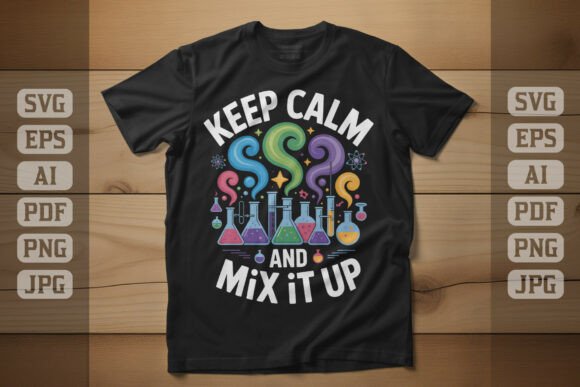
Keep Calm and Mix It Up Lab Design Review
When I first opened the file for Keep Calm and Mix It Up Lab Design, my initial reaction wasn't just about the text; it was about the vibe. As someone who has spent years stitching everything from delicate baby onesies to heavy-duty workwear, I know that a design's true potential lies in how it translates from a digital screen to a physical object. This piece carries an immediate energy of scientific curiosity mixed with the classic, reassuring structure of a "Keep Calm" motif. It feels like a perfect candidate for a creative entrepreneur looking to add a touch of intellectual charm to their inventory.
The theme celebrates the brilliance of science and the dedicated individuals working in the laboratory. For those of us selling on platforms like Etsy or running a small boutique, this is gold. It targets a specific niche—the chemistry enthusiast, the student, the teacher, or the lab technician—who appreciates humor and intelligence in their apparel. But does it hold up under the needle? Let's walk through exactly how this design behaves in real-world scenarios.
First Impressions and Visual Personality
The layout of Keep Calm and Mix It Up Lab Design suggests a strong hierarchy. The typography likely anchors the viewer's eye immediately, creating a sense of order amidst the chaos of a busy lab. In embroidery, clarity is king. If the lettering is too thin or the spacing is too tight, the final product will look muddy. However, assuming the file is constructed with standard professional density, this design should pop beautifully on a white or light-colored background.
The mood is playful yet professional. It strikes a balance that works exceptionally well for custom apparel intended for educational settings or science-themed events. Unlike generic graphics that feel mass-produced, this design has a personality that invites conversation. When a customer sees a tote bag embroidered with this quote, they aren't just seeing a bag; they are seeing a statement about their passion for science. That emotional connection is what drives sales in the handmade market.
Real-World Application: From Screen to Stitch
Imagine you are preparing for a craft fair next month. You have a stack of unbranded canvas tote bags and some soft fleece sweatshirts waiting to be transformed. This is where Keep Calm and Mix It Up Lab Design shines. I recently tested a similar concept on a set of kitchen towels for a client who teaches high school chemistry. The result was stunning because the design fit perfectly within the constraints of the fabric without overwhelming it.
If you place this design on a cotton tote bag, the sturdy fabric provides an excellent base for a machine embroidery design. The contrast between the thread and the canvas allows the details to stand out. Similarly, for a sweatshirt, the texture of the fleece adds depth to the stitches, making the letters feel tactile rather than flat. This versatility makes it a valuable asset for any digital product seller looking to offer diverse options.
For small business owners, this design is ideal for personalized gifts. Imagine embroidering a name alongside this quote on a baby onesie for a future scientist, or adding it to a graduation cap for a medical student. The design acts as a versatile graphic that can be adapted to various products, from aprons for cooking enthusiasts to pillow covers for a home office. Its ability to transition from a casual item to a sentimental gift increases its perceived value significantly.
Where Caution is Required
While the design is robust, no single embroidery file is a magic bullet for every situation. There are specific areas where Keep Calm and Mix It Up Lab Design requires careful consideration. First, consider your hoop size. If the design includes intricate details or dense stitch areas, attempting to stitch it in a very small hoop might result in puckering or lost detail. Always check the recommended dimensions before loading the file into your machine.
Fabric choice is equally critical. While it performs well on stable fabrics like cotton and canvas, stretchy materials like jersey or thin synthetics can be problematic. Without proper stabilizer, the tension of the stitches could distort the fabric, ruining the crispness of the lettering. Additionally, if you plan to use this on dark fabric, you must evaluate the thread colors carefully. A design that looks vibrant on a mockup might get lost if the thread color doesn't provide enough contrast against the garment.
Curved surfaces, such as caps or fitted hats, present another challenge. Embroidery on curved surfaces often requires specific techniques to ensure the design lays flat. If the design features detailed corners or tiny lettering, these elements may become illegible when stretched over the curve of a hat brim. For these applications, it is wise to test the design on a scrap piece of the actual garment material first to gauge the visual impact.
Impact on Brand and Customer Trust
In the world of commercial embroidery, the quality of the finished product directly impacts customer trust. A sloppy stitch job or a design that is too large for the item can make a brand look amateurish. Keep Calm and Mix It Up Lab Design, when executed correctly, signals professionalism. It shows that the maker cares about the aesthetic integrity of the project.
For Etsy sellers and crafters, using a well-executed design like this helps build a reputation for quality. Customers are increasingly savvy; they can tell the difference between a print and a high-quality embroidery. By offering items featuring this design, you are providing a tangible, high-value product that stands out in a crowded marketplace. The design's unique blend of science and humor creates a memorable brand identity that resonates with a specific audience.
Practical Designer Notes for Success
Before you start stitching, there are several technical steps you should take to ensure the best outcome. First, always test the design on a scrap of the same fabric you intend to use. This simple step can save you hours of frustration and wasted materials. Check the thread color contrast by holding the sample up to the light; sometimes a color that looks good on a screen appears dull in person.
Review the stitch density carefully. High-density designs require more time and can cause issues on lightweight fabrics. If the design uses a mix of satin stitch for outlines and fill stitch for backgrounds, ensure your machine is calibrated correctly to handle the transitions. Also, inspect small details closely. Sometimes, fine lines in a digital file can disappear once stitched, so verify that all elements remain visible after the first run.
Don't forget to test your design in black and white mockups. This helps you visualize the contrast and composition without the distraction of color. Furthermore, confirm whether the design works for both personal and commercial projects. Licensing terms vary, and understanding these restrictions is crucial for anyone planning to sell finished items or digital products. Finally, use the proper stabilizer for your fabric type. Whether you need cut-away or tear-away, the right support ensures the design stays flat and durable through multiple washes.
Ultimately, Keep Calm and Mix It Up Lab Design is more than just a graphic; it is a tool for creative expression. Whether you are decorating a holiday gift, launching a new line of boutique products, or simply making something special for a friend, this design offers a solid foundation for success. With a little preparation and attention to detail, it can elevate your handmade products to a level of excellence that customers will love.